Raul Castro's grandson: Cuba will implement 'capitalist' reforms to save Castro communist dynasty
The message is clear: the ruling elite is willing to adapt economically, but only on terms that preserve its political control
Creado: June 19, 2026 11:34am
Actualizado: June 21, 2026 8:48pm
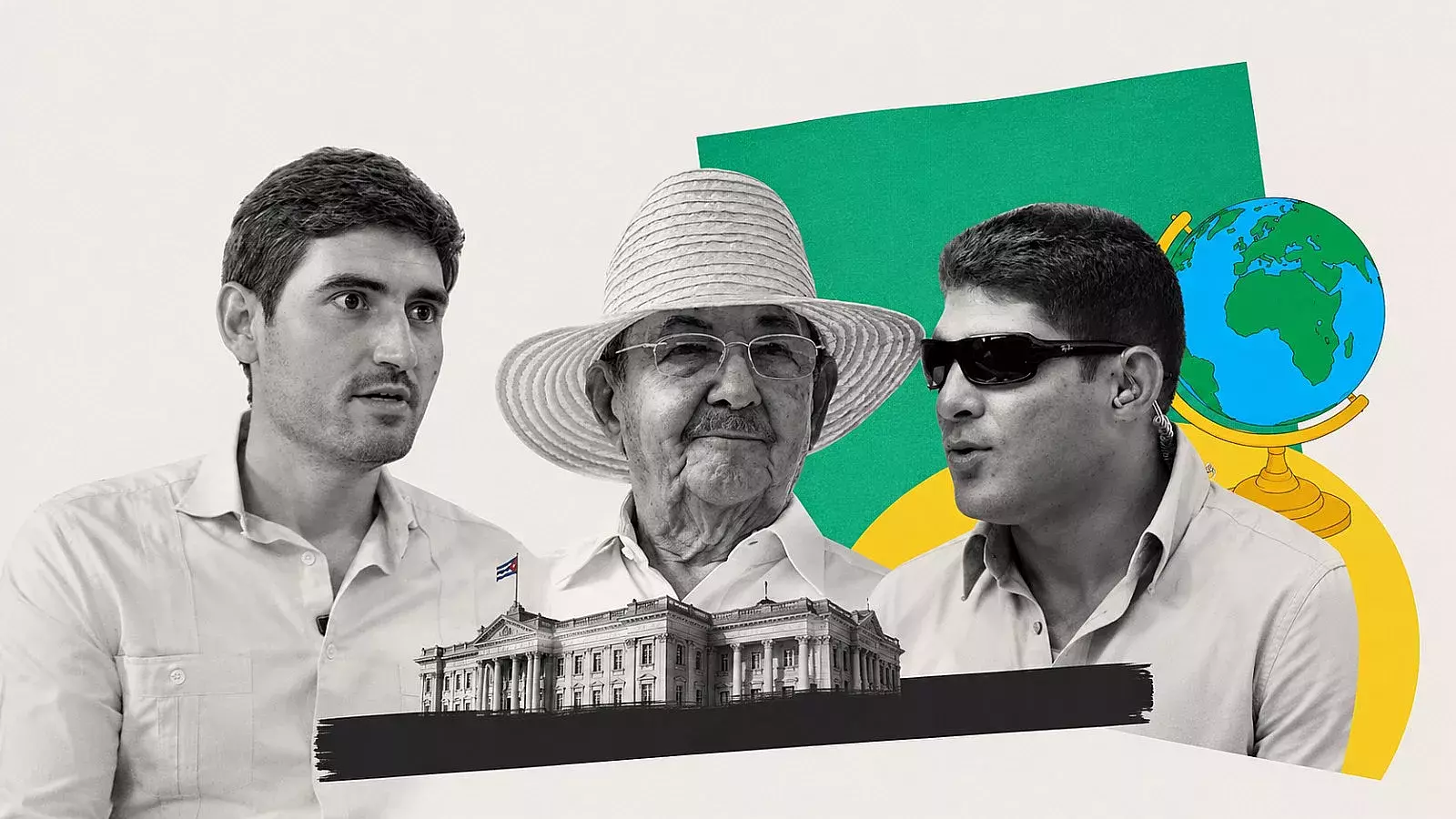
Raul Castro's grandson, Raúl Guillermo Rodríguez Castro, granted his first interview on Friday to The National, an Emirati newspaper. The interview, which was given alongside Cuban foreign trade minister Carlos Luis Jorge Méndez, came just one day after the regime proposed 176 economic reforms to expand private-sector participation and foreign investment is an apparent desperate act to avoid a U.S. military intervention.
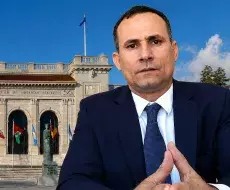
"This interview is directed entirely at the United States and the American business community," José Raúl Gallego, a researcher and Ph.D. in Communication Studies told ADN Cuba.
The choice of the news outlet and the timing of the interview reinforce Gallego's interpretation. In recent years, the United Arab Emirates has served as an intermediary for authoritarian governments trying to soften Washington.
The interview also coincides with recent debate in the United States about Washington's sanctions on Cuba.
Although Rodríguez Castro's comments drew most of the headlines, most of the discussion was led by Méndez, who aimed his comments at American business leaders and policymakers, suggesting that Havana is willing to reform its economy, but needs U.S. sanctions lifted.
According to Gallego, this narrative echoes a longstanding argument advanced by the regime's lobbying and influence networks in Washington: ease economic pressure first, and capitalist reforms will follow.
"They argued that the embargo prevents Cuba from implementing deeper reforms, and that is simply false," the scholar told ADN.
The deputy minister contradicted himself by simultaneously advocating for economic reform while ruling out political changes from communism.
"Many of the changes Cuba needs are political in nature. The deputy minister himself said they are willing to transform the economic model, but neither need nor are willing to transform the political model," Gallego warned.
In his comments, Rodríguez Castro said the regime would not accept political conditions as part of any potential rapprochement.
"We continue to believe that dialogue is the path that brings us closer together, not confrontation," he said. However, he warned that any progress in bilateral relations would not be based on "conditions, impositions, or demands."
For Gallego, this stance encapsulates Havana's broader strategy: seeking sanctions relief while rejecting any democratic reforms.
The interview ignored topics such as political prisoners, political pluralism, independent labor unions, judicial independence, guarantees for private property rights, the role of GAESA in the economy, and the economic and social costs of Cuba's communist one-party system.
As is often the case in official Cuban regime narratives, the country's economic crisis was blamed on outside forces.
The interview's rhetorical strategy relied heavily on the repeated use of terms such as "economy," "investment," "respect," "dialogue," and "sanctions," echoing the messaging long employed by Cuban dictator Miguel Díaz-Canel, albeit delivered by a new generation of spokespeople.
The conversation referenced the economic opening models of Vietnam and China, echoing the discourse promoted by the regime's newly identified economic advisers, whose names emerged this week.
Yet Cuba's leadership continues to avoid committing to a concrete roadmap.
In a 2015 interview, economist Juan Triana — now an adviser to the regime — argued that Cuba "does not have to copy the Chinese or Vietnamese model," but should instead find its own path.
That same idea resurfaced in a phrase repeatedly used by both Méndez and Rodríguez Castro, who continuously referred to "a Cuban way of doing things."
The expression functions as a form of strategic ambiguity, promising modernization and economic opening without defining measurable reforms, concrete timelines, or verifiable mechanisms.
The interview's most significant moment came in its closing minutes, when Méndez hinted at the possibility of negotiating compensation for properties nationalized after the Revolution.
"We have more complex issues, such as the nationalization process, which we are also willing to discuss on the basis of mutual respect," he said.
He later added that the regime would be willing to seek "acceptable" agreements both for foreign companies whose assets were nationalized and for Cubans who left the country.
The remarks were clearly aimed to carry particular significance in light of the 1996 Helms-Burton Act, which conditions the full normalization of U.S.-Cuba relations on the resolution of claims stemming from expropriations carried out by the Cuban regime.
Although no details were offered regarding possible restitution or compensation mechanisms, the message appears to be a calculated nod to one of the principal legal obstacles to any future easing of U.S. sanctions.
The proposal ultimately aligns with the interview's narrative: preserving the dictatorship while and easing external economic pressure.
Rather than signaling a democratic opening, the interview advances a new social contract without guarantees: economic liberalization without political liberalization.
Carlos Luis Jorge Méndez embodies the technocratic face of that strategy, while Raúl Guillermo Rodríguez Castro — who answered only one question throughout the interview — serves as the guarantor of political continuity.
"The real significance was his presence in that room, as the heir to the Castro family, the people with whom Cuba's future is ultimately negotiated," Gallego said.
Havana's message is clear: it is willing to introduce economic adjustments, but only on terms that preserve the political control of the ruling elite.
Karla Pérez
Cienfuegos, 1998. Periodista cubana refugiada política en Costa Rica.